
 English
 Español
 العربية
 Indonesia

ล้างจานขนาดใหญ่
Large-scale dishwashing is an organized, highly systematized process designed to clean large quantities of tableware, cookware, and utensils quickly, safely, and consistently. It is commonly used in hotels, cafeterias, hospitals, schools, and event venues, where hundreds or even thousands of items must be washed every day. The main goals are hygiene, efficiency, and the protection of both staff and equipment.The process usually begins in the soiled dish area, where used plates, bowls, cutlery, glasses, and pans are collected. Staff scrape leftover food into waste containers or food waste systems to prevent clogging and to keep the wash water cleaner for longer. In many operations, items are also pre‑rinsed with a spray hose to remove loose particles and sauces before entering the main washing stage. Proper sorting happens here as well: glassware, delicate items, pots and pans, and plastic trays may be placed in different racks or sent to separate sections.Once the dishes are prepared, they are loaded into racks or placed on conveyor belts that feed into high‑capacity dishwashing machines. These machines often feature multiple zones: a pre‑wash section, a main wash section, and a final rinse section. In the pre‑wash, warm water removes the majority of remaining residues. The main wash combines higher temperatures with detergents that break down grease and protein. Detergent dosing systems are usually automated to ensure the correct concentration and to reduce waste.The final rinse is critical for hygiene. It typically uses very hot water, often above 80°C, combined with a rinse aid that helps water sheet off the surface of the dishes. This high temperature contributes to thermal disinfection, reducing the presence of harmful microorganisms. In some systems, additional sanitizing chemicals may be used, especially where strict health standards are in place or where lower temperatures are required to protect certain materials.After rinsing, dishes move into the drying phase. In many large‑scale systems, powerful blowers and the residual heat from the rinse water accelerate drying so that plates and glasses can be handled and stored quickly. Proper drying is important because standing water can attract bacteria and cause spotting on glassware. Staff then unload the clean items and return them to storage areas, ready for reuse.Behind the scenes, maintenance and monitoring are essential. Water quality, machine temperature, chemical levels, and mechanical components must be checked regularly. Filters and nozzles require cleaning to maintain good water flow and to prevent blockages. Staff training plays a significant role, ensuring that hygiene standards are met, safety procedures are followed, and the equipment is used correctly.Modern large‑scale dishwashing also considers environmental impact. Many systems include heat recovery features, efficient pumps, and optimized spray patterns to reduce water and energy consumption. By combining advanced machinery, clear workflows, and strict hygiene practices, large‑scale dishwashing operations support safe food service while handling high volumes with reliability and speed.
สินค้า
การจัดหมวดหมู่:
-
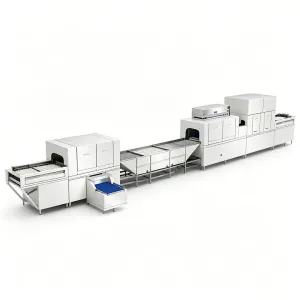
สายการประกอบการล้างจานขนาดใหญ่เชิงพาณิชย์การฆ่าเชื้อการทำให้แห้ง
การจัดหมวดหมู่: เครื่องล้างจานซีรีส์เข้าชม: 10จำนวน:เวลาเผยแพร่: 2026-04-20 14:35:01สายการประกอบการล้างจานฆ่าเชื้อและการอบแห้งเชิงพาณิชย์ขนาดใหญ่นี้ตระหนักถึงการล้าง การฆ่าเชื้อ และการอบแห้งอัตโนมัติแบบครบวงจร โดยสามารถประมวลผลภาชนะบนโต๊ะอาหารขนาดใหญ่ได้อย่างมีประสิทธิภาพ ลดต้นทุนแรงงาน และตรงตามข้อกำหนดด้านสุขอนามัยการจัดเลี้ยงที่เข้มงวด
ข่าว
การจัดหมวดหมู่:
ไม่มีผลการค้นหา!
กรณี
การจัดหมวดหมู่:
ไม่มีผลการค้นหา!
วีดีโอ
การจัดหมวดหมู่:
ไม่มีผลการค้นหา!
ดาวน์โหลด
การจัดหมวดหมู่:
ไม่มีผลการค้นหา!
รับสมัครงาน
การจัดหมวดหมู่:
ไม่มีผลการค้นหา!
ผลิตภัณฑ์ที่แนะนำ
ไม่มีผลการค้นหา!



 วอทส์แอพพ์
 โทรศัพท์